


After years navigating the corridors of big-budget franchises, Sam Raimi returns to terrain he masters with playful dexterity: ingenious cruelty and physical horror. With the film Send Help, the director not only leaves behind the rigidity of shared cinematic universes, but also recovers the aesthetic signature that turned him into a cult author. This new proposal presents itself as a survival exercise that, beneath an apparently banal premise, hides a sharp satire on power hierarchies and gender dynamics in the workplace, all filtered through camp and visual excess.
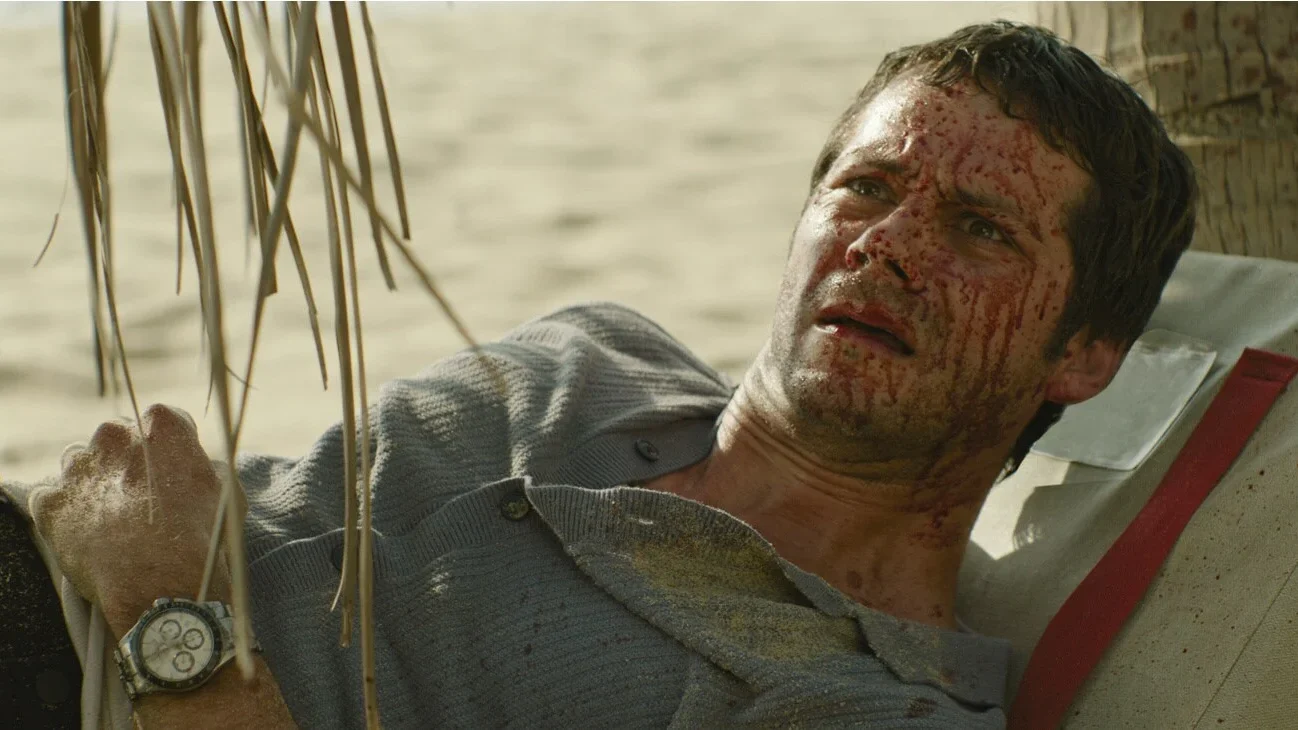
The plot revolves around Linda Liddle (Rachel McAdams), an underestimated employee who has to deal with Bradley Preston (Dylan O’Brien), her misogynistic boss and heir to a fortune that clearly overwhelms him. What begins as a corporate trip to Bangkok to finalize a business merger quickly turns into a nightmare when the plane transporting them crashes during a storm. Stranded on a deserted island, the previous social order collapses and the film becomes a psychological and physical battleground where the struggle for survival redefines who truly holds authority.
First and foremost, it is worth highlighting the reunion of a key creative team. The collaboration with composer Danny Elfman and cinematographer Bill Pope brings back to the screen the kinetic energy that characterized Raimi’s best works. Crash zooms, extreme close-ups, and editing that plays with transitions in an almost cartoonish way are all present. Although some visual effects may feel somewhat rough, that very roughness seems to engage in dialogue with a sensibility typical of 1990s popcorn cinema, giving the film an analog and honest quality that feels rare in today’s industrial landscape.
Rachel McAdams’ performance is, without a doubt, the axis on which the success of the narrative pivots. Her ability to move seamlessly from the vulnerability of an underestimated woman to the ferocity of a survivor on the edge of madness is remarkable. Alongside her, Dylan O’Brien manages to create an irritating but necessary antagonist, a character who embodies blind privilege and serves as the perfect target for the script’s sadistic impulses. The chemistry between the two, built on constantly shifting contempt, sustains the film’s interest even when the pacing slightly stalls in the second act.
You might also like: ’28 Years Later: The Bone Temple’ Review: A Bold Sequel That Expands The Universe
The production draws from classic references such as Lord of the Flies, Misery, Survivor, and Cast Away, but processes them through the lens of the dark humor characteristic of the director of Evil Dead. This is not merely a survival drama; it is a comedy of morbidity where blood and bodily fluids are used with cathartic intent. In doing so, Raimi reminds us that genre cinema can be just as visceral as it is intelligent in its social commentary, without ever losing its vocation for pure entertainment.
Although the ending feels somewhat rushed, the overall impact of the film is more than positive. Send Help feels like the work of a filmmaker who has rediscovered his enthusiasm for the craft, delivering a movie that, while it does not reach the absolute delirium of his masterpieces, stands as his strongest contribution to the genre in over a decade. It is an invitation to enjoy a direct, physical, and mischievous kind of cinema that celebrates the return of an essential director to his zone of greatest creative freedom.
Our Rating for Send Help
4/5 = Very Good
Cast and Crew
- Send Help (2026)
- Director: Sam Raimi
- Screenplay: Damian Shannon, Mark Swift
- Cast: Rachel McAdams, Dylan O’Brien, among others
- Cinematography: Bill Pope
- Music: Danny Elfman
- Runtime: 113 minutes